


14 Aug The rise of AI Agents: How MCP opens your organization to AI
Over the past year, the AI landscape has fundamentally changed. We’ve moved beyond the era of static chatbots and entered the age of AI agents. AI agents are autonomous systems capable of taking actions, querying business systems, and automating complex workflows.
This new level of autonomy relies on an emerging technology: the Model Context Protocol (MCP).
While MCP enables unprecedented productivity and seamless integration between AI and enterprise systems, it also introduces new security challenges that every IT administrator and security professional should understand.
Understanding LLMs and MCP
Let’s start with the basics
Large Language Models (LLMs)
A Large Language Model (LLM) is the “brain” behind an AI assistant. It understands natural language, reasons through problems, plans tasks, and generates responses.
However, an LLM is inherently isolated. By itself, it has no access to your organization’s internal databases, SaaS applications, identity platforms, CRM systems, or cloud infrastructure.
Model Context Protocol (MCP)
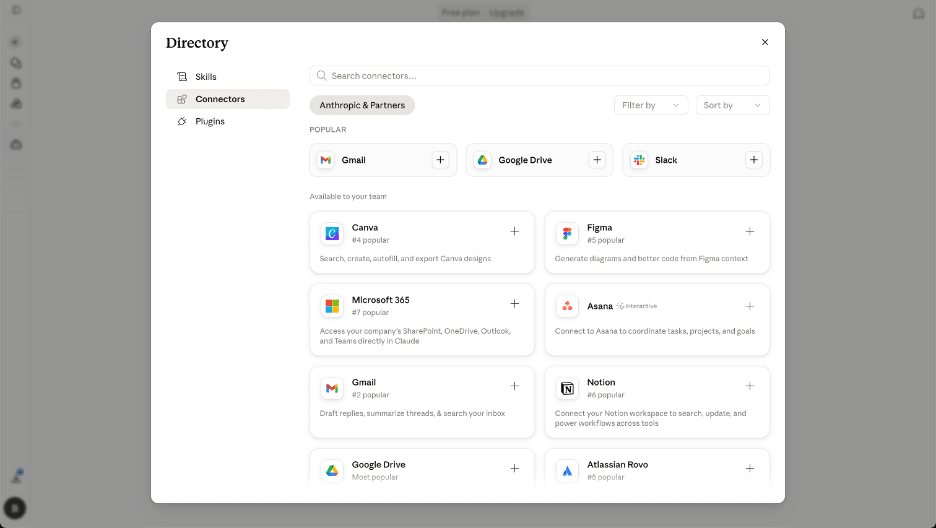
The Model Context Protocol (MCP) acts as the bridge between an AI model and external systems.
Rather than building custom integrations for every application, MCP provides a standardized protocol that allows AI assistants to securely interact with APIs, databases, identity providers, and business applications.
In other words, MCP translates enterprise data and services into a format that AI models can understand and use.
Why MCP Integrations Introduce New Security Risks
MCP itself is not the problem. The challenge lies in how quickly AI integrations are being deployed, often outside the visibility of IT and security teams.
Developers and end users are increasingly connecting AI tools such as Cursor, Visual Studio Code, Claude Desktop, or ChatGPT to internal MCP servers to automate everyday tasks.
This creates a growing form of Shadow AI.
Without proper governance, AI agents may gain access to systems and data that have never been reviewed by security teams. Recent security research has shown that poorly configured (or even malicious) MCP servers can expose sensitive information or perform unintended actions.
Because these AI agents often operate using the permissions granted to the connected identity, they may be able to:
- Read confidential emails or documents
- Access internal databases
- Reset passwords or modify user accounts
- Query sensitive business applications
- Exfiltrate corporate data to external services
If these AI agents are deployed outside your asset inventory or identity management platform, organizations may have little visibility into which agents exist, what they can access, or who authorized them.
JumpCloud Agentic AI Gateway: Bringing Governance to the AI Era
Organizations want to embrace AI without sacrificing security.
That’s where the JumpCloud Agentic AI Gateway comes in. Rather than allowing AI agents to connect directly to enterprise resources, the JumpCloud Gateway acts as an intelligent control layer between AI assistants and your infrastructure.
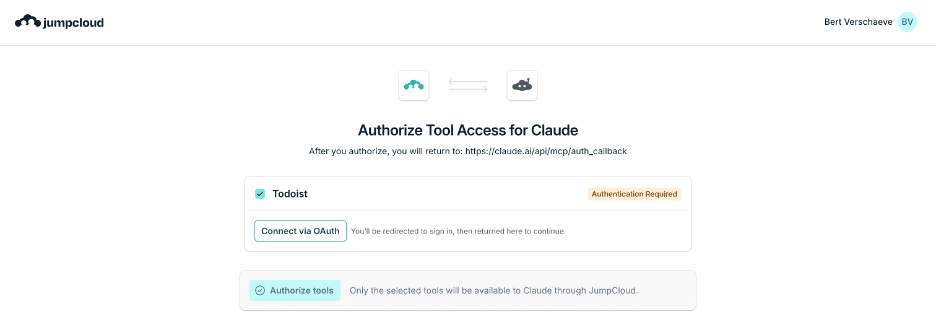
Its key capabilities include:
- Discover Shadow AI: JumpCloud helps organizations identify autonomous AI agents operating across their environment. Security teams gain visibility into which AI tools are attempting to access corporate resources and can detect unmanaged or unauthorized AI activity.
- Identity Management for Non-Human Identities: Traditional identity security focuses on people. AI agents represent a new category of Non-Human Identities (NHIs) that also require authentication, authorization, and lifecycle management. JumpCloud verifies the identity of AI agents, ensuring they receive only the permissions required to perform their intended tasks while enforcing the principle of least privilege.
- Centralized Governance: Instead of managing disconnected AI integrations across multiple tools, administrators gain a single pane of glass for policy enforcement.
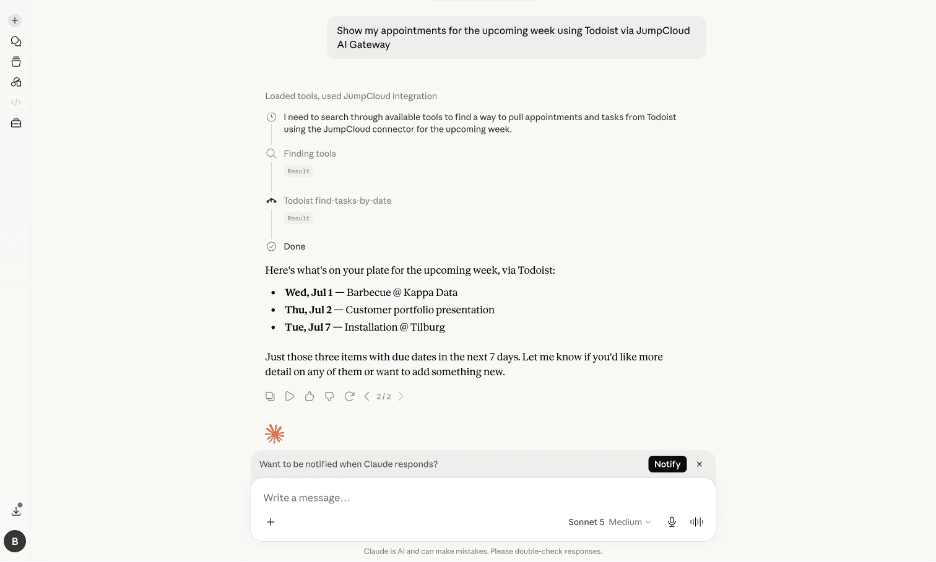
Organizations can define:
- Which AI agents are allowed
- Which MCP servers they may connect to
- Which applications and data they can access
- What actions they are permitted to perform
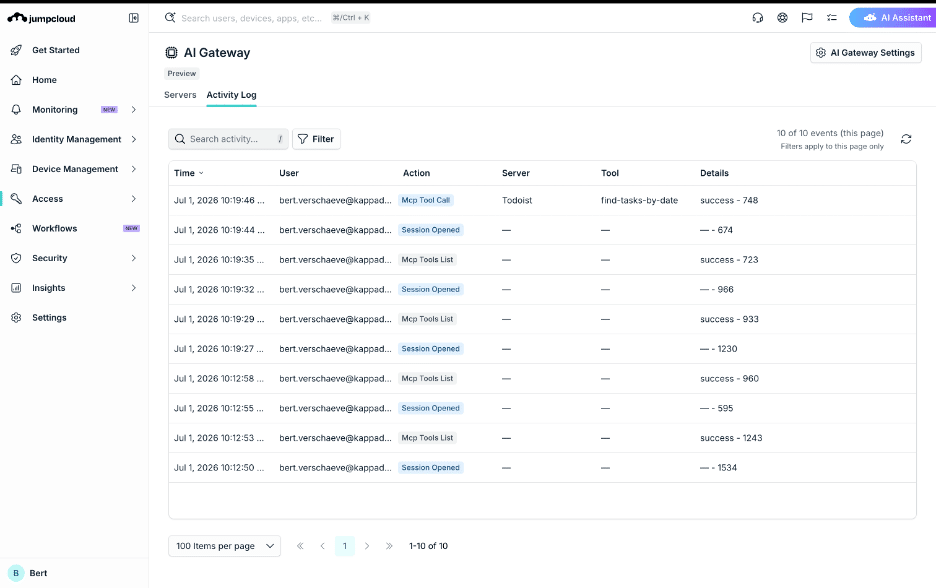
If suspicious behavior is detected, access can be revoked immediately from a central location.
Auditing & governance
The gateway provides a security layer that monitors and governs AI traffic.
It validates requests, enforces policy, protects legacy systems from misuse, and ensures interactions through MCP are monitored and auditable, helping organizations meet both security and compliance requirements.
Securing AI Requires More Than Identity
Identity governance is only one part of securing AI adoption. As AI assistants become embedded in everyday workflows, organizations also need visibility into where AI traffic is going, what data is being shared, and whether employees are interacting with approved AI services.
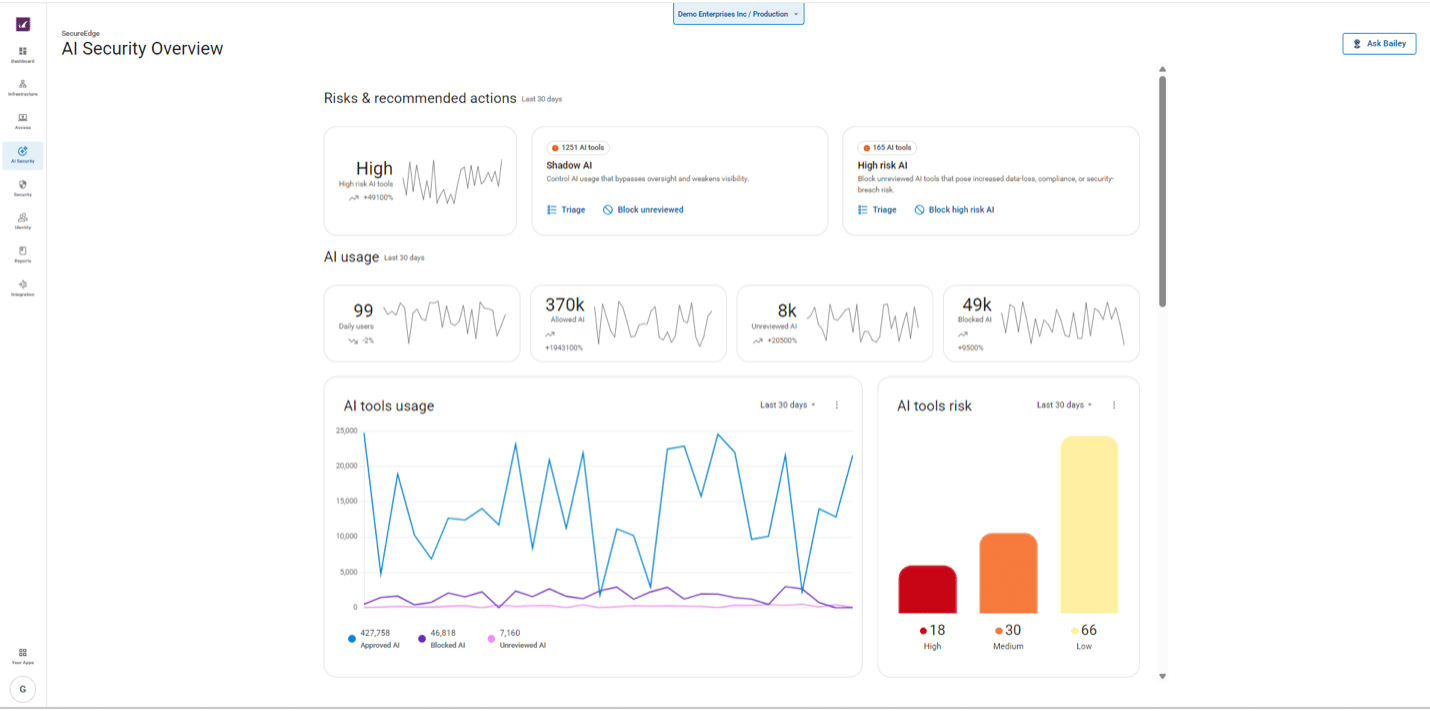
Barracuda SecureEdge extends security to the network edge by inspecting and controlling traffic to AI applications. It helps organizations discover the use of public AI platforms, enforce acceptable-use policies, and reduce the risk of sensitive information being inadvertently shared with external AI services.
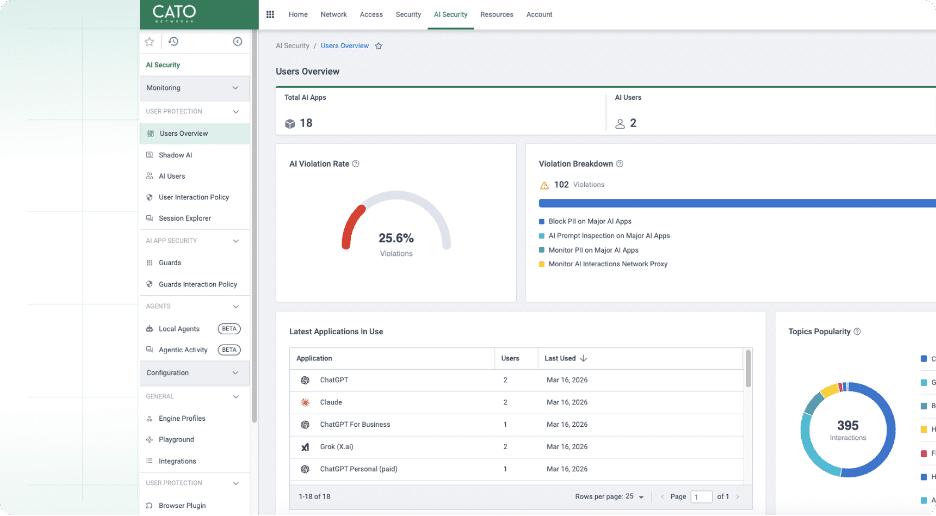
Cato Networks takes a similar cloud-native approach within its SASE platform, combining networking and security into a single service. Its AI security capabilities help organizations identify AI usage, inspect traffic, and apply Zero Trust policies consistently across offices, remote users, and cloud environments. It goes further in the sence that Data Loss Prevention is also applied to prevent confidential data from leaving the organization
Conclusion
AI agents and the Model Context Protocol are no longer emerging concept, they are rapidly becoming part of the modern workplace.
The productivity gains are enormous, but without proper identity governance and access controls, organizations risk creating a new generation of unmanaged identities and invisible attack surfaces.
Solutions such as the JumpCloud Agentic AI Gateway help transform AI from a potential security liability into a trusted business accelerator.
By combining identity management, policy enforcement, and visibility into AI activity, organizations can embrace innovation while maintaining control over their users, agents, and data.
Of course, defending yourself against unauthorized access by AI agents or unauthorized usage of AI tools by humans can’t be solved by one technology. It is important to have a clear view on:
- Who is accessing AI? (Identity and authentication)
- What is AI allowed to access? (Authorization and governance)
- Where is data flowing? (Network security, DLP, and traffic inspection)
As AI becomes a core component of business operations, organizations need security controls that span identities, endpoints, networks, cloud services, and AI agents, not just one of these domains.
AI is here to stay, it’s a phenomenal technology that can drive your business, but it’s important to do it in a secure way where governance is taken into account. No matter what your focus is: the governance of identities, AI agents, getting more control over how your users interact with AI, we can help to enable your organization to use AI in a secure way.
Don’t hesitate to contact us via [email protected]
No Comments